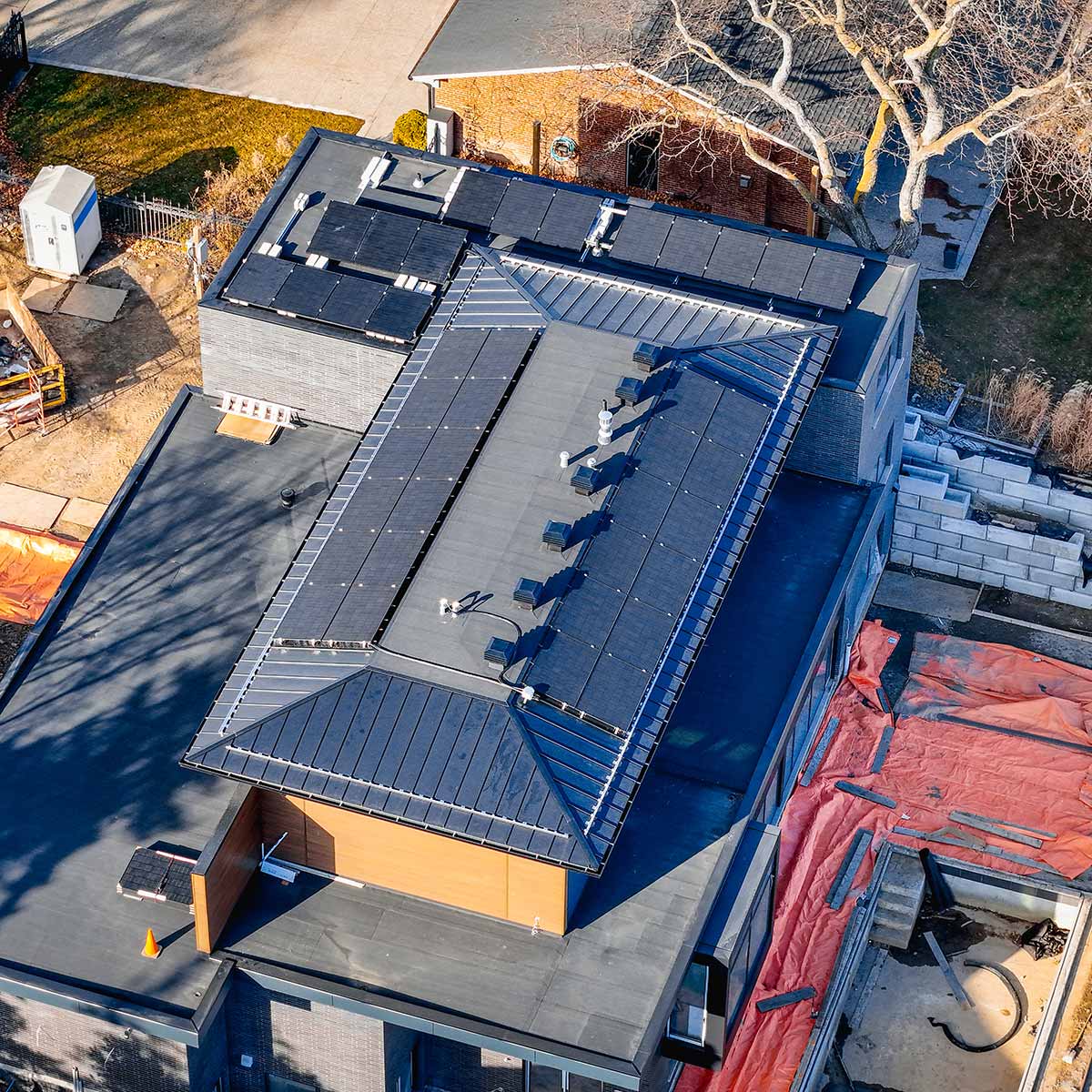
Why Go Solar?
- Lower monthly hydro bills
- Protect against rising energy costs
- Increase home value
- Reduce your environmental footprint
- Long-term energy independence
Our Approach
- Home Assessment & System Planning
- Custom Solar Design
- Utility & Permit Coordination
- Project Management and Scheduling
- System Activation & Monitoring
Equipment & Technology
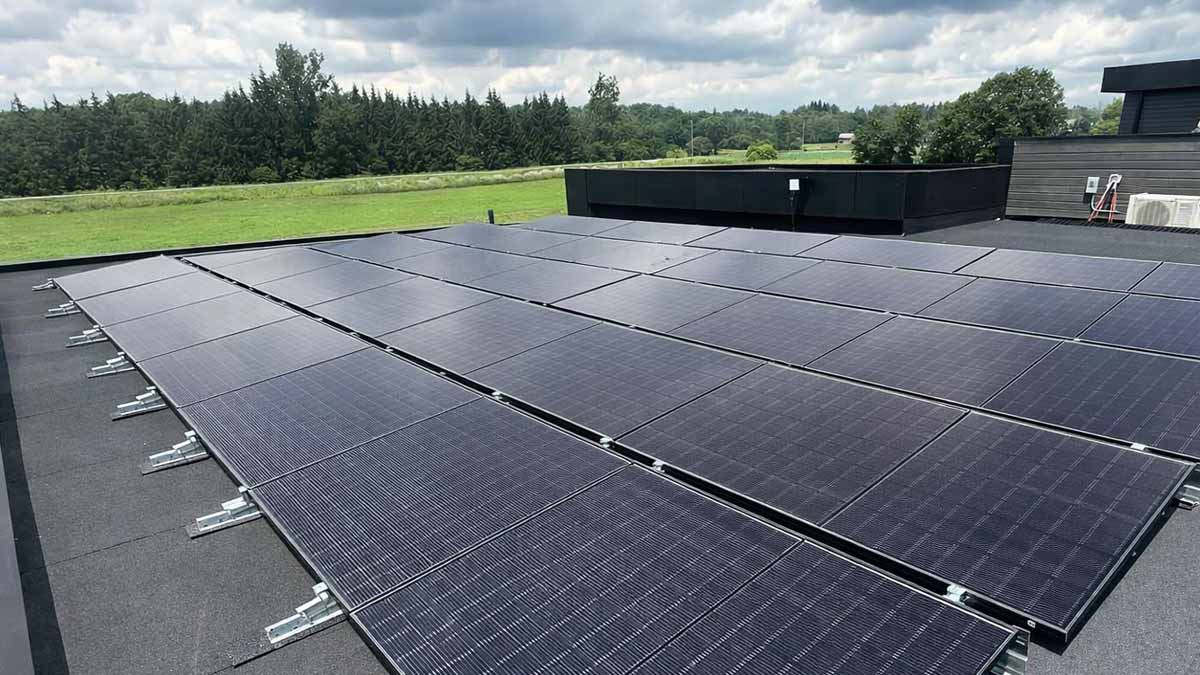
We work with proven, high-performance solar equipment designed for Ontario’s climate, ensuring reliability, efficiency, and long-term value.

Incentives & Financing
Federal and provincial programs can reduce the cost of going solar. We help you understand what’s available and how to maximize your savings.
Ready to
explore solar?
Tell us about your project and we’ll take it from there.
Frequently Asked Questions
Have questions about going solar with Clean Electric? You’re not alone. Below are answers to some of the most common questions we receive about our process, project coordination, and how we deliver turnkey solar solutions across Ontario.
We believe in being clear, transparent, and compliant every step of the way, so you can feel confident from the first conversation to a fully operational system.
Residential solar systems typically start from around $18,000+, depending on your home’s size, electricity usage, and available roof space for solar panels.
At Clean Electric, we use advanced solar design and financial modeling software to evaluate your home’s energy consumption and design a customized solar photovoltaic (PV) system tailored to your needs. Rather than just sizing a system to fit the roof, we focus on maximizing return on investment.
We analyze how long it will take for your solar system to pay for itself through electricity savings, net metering credits, and available government incentives. In many cases, homeowners see their system pay for itself over time while continuing to generate clean solar energy and reduce electricity costs for decades.
Most residential solar panels are designed to last 25 to 30 years or more while continuing to produce reliable electricity. Major solar panel manufacturers typically provide 25-year performance warranties, guaranteeing that the panels will still produce around 80–85% of their original power output after 25 years. Studies by organizations such as the National Renewable Energy Laboratory have also found that modern solar panels degrade very slowly, at an average rate of about 0.5% per year, meaning a properly installed solar photovoltaic (PV) system can continue producing clean solar energy for decades.
To help maximize the lifespan and performance of your solar system, Clean Electric can also provide an optional annual maintenance program. This includes annual site visits to inspect the solar panels, electrical connections, and inverter equipment to ensure the system is operating at peak efficiency. Regular inspections help identify any potential issues early and help ensure your solar photovoltaic system delivers the full performance and longevity it was designed for.
Most homes in Southern Ontario are well suited for solar panels. The Greater Toronto Area receives a strong amount of annual solar irradiation, comparable to many regions in northern Europe where solar energy is widely used. In fact, Southern Ontario typically receives about 1,100–1,200 kWh of solar energy per installed kilowatt of solar panels each year, making residential solar photovoltaic (PV) systems a very effective source of renewable electricity.
Roof size, orientation, and pitch all influence how much solar energy your system can produce. South-facing roofs typically produce the highest output, but east- and west-facing roofs can still generate excellent solar power. Roof pitch also plays a role, with angles between 30° and 40° often performing very well in Ontario’s latitude, although solar panels can be installed efficiently on a wide range of roof slopes.
At Clean Electric, we use advanced solar design software and satellite-based modeling to analyze your roof’s size, orientation, shading, and tilt. This allows us to place solar panels in the most productive areas of the roof and design a solar system that maximizes energy output throughout the year. Even on pitched roofs with varying angles, careful system design and panel placement can significantly optimize the performance of your residential solar energy system.
Net metering is one of the biggest advantages of installing residential solar panels because it allows homeowners to maximize the value of the solar energy their system produces. In Ontario, when your solar photovoltaic (PV) system generates more electricity than your home is using during the day, that excess solar power is automatically sent back to the utility grid. In return, your electricity provider gives you energy credits through the net metering program.
These credits can then be used later when your home draws electricity from the grid — such as at night, or in the winter months when solar production is lower. This allows your solar energy production during sunny periods to offset the electricity you use when the system is not producing power.
For homeowners, net metering significantly improves the return on investment of a residential solar system. Instead of wasting excess solar energy, every kilowatt-hour your solar panels produce can be applied toward reducing your electricity costs. Over the course of a year, a properly sized solar photovoltaic system can balance your home's total electricity consumption with the energy produced by your solar panels, often resulting in very low or near-zero annual electricity bills.
Because of this structure, net metering allows homeowners in Ontario to use the electrical grid as a virtual battery, making residential solar systems more efficient, more economical, and far more practical than relying on battery storage alone.
Research in Canada has shown that energy-efficient homes — including those with solar photovoltaic (PV) systems — can command higher resale values because of the long-term energy savings they provide. Guidance from the Appraisal Institute of Canada and research supported by Natural Resources Canada indicate that solar energy systems can increase property value when the system reduces a home’s operating costs and electricity bills.
Appraisers often evaluate solar installations using an income approach, which considers the present value of the electricity savings the solar system will generate over time. In practical terms, this means that a home producing its own solar power — particularly in provinces like Ontario with net metering programs — can be more attractive to buyers because it offers predictable long-term energy savings.
For homeowners, this means residential solar panels can provide value in two ways: reducing electricity bills today and potentially increasing resale appeal in the future. A properly designed solar photovoltaic system can offset a significant portion of a home’s electricity use, making the property more energy-efficient and appealing to environmentally conscious buyers.
Solar panels continue to generate electricity even on cloudy days because modern solar photovoltaic (PV) systems can capture diffuse sunlight that passes through cloud cover. Southern Ontario receives sufficient annual sunlight to make solar a highly effective energy source, with residential systems typically producing approximately 1,100–1,200 kilowatt-hours per installed kilowatt each year.
In winter, snow covering the panels can temporarily reduce production by blocking sunlight. However, solar panels are typically installed at an angle, allowing snow to slide off naturally as temperatures rise or sunlight warms the surface. Even on flat roofs, panels are mounted on angled racking systems to promote snow shedding and maintain efficient energy production.
Because solar systems in Ontario are designed based on total annual energy production, temporary reductions during snowy periods are already factored into the system design. During sunnier months, your system produces excess electricity that can be exported to the grid through net metering, helping offset lower winter production.
While rebate programs change over time, homeowners in Ontario can still benefit from a number of incentives that make residential solar systems more affordable. The most important program is Ontario’s net metering program, which allows homeowners to send excess solar energy their photovoltaic (PV) system produces back to the grid in exchange for electricity credits. These credits can then be used later when your home draws power from the grid, helping significantly reduce your overall electricity costs.
In addition to net metering, federal programs and financing initiatives previously available were designed to help reduce the upfront cost of installing solar panels. For example, programs administered by Natural Resources Canada have supported initiatives that help homeowners improve energy efficiency and adopt renewable energy technologies such as solar photovoltaic systems.
Because incentives, grants, and financing programs can change periodically, Clean Electric helps homeowners identify and apply for any available federal or provincial incentives that may apply to their project. As part of the solar proposal process, we also work with homeowners to evaluate their electricity usage and develop a solar system that maximizes long-term energy savings and return on investment.
One of the main advantages is backup power during outages. A battery allows a home to temporarily operate independently from the grid, keeping essential circuits such as refrigeration, lighting, internet, or sump pumps running when utility power is unavailable. In some cases, battery systems can also be paired with a backup generator, creating a hybrid system where solar panels provide energy during the day, batteries store excess energy, and the generator can automatically start if extended backup power is required.
Battery storage can also provide a greater level of energy independence. Instead of relying entirely on the electrical grid, homeowners can use more of the solar energy their system produces directly in their home. For some homeowners, this added resilience and control over their energy supply is a key reason to include battery storage as part of their residential solar system.
Residential solar panels are designed to be very low maintenance. In most cases, rain naturally washes away dust, pollen, and debris from the surface of the panels, allowing them to continue operating efficiently without cleaning.
In certain situations, such as extended dry periods, nearby construction, heavy pollen, or debris from surrounding trees, panels may accumulate buildup that can affect performance. In these cases, it is generally recommended to consult a professional rather than attempting to clean the panels yourself, particularly for safety and to avoid potential damage.
As part of maintaining a residential solar photovoltaic (PV) system, we believe it is beneficial and good practice, though not typically required under manufacturer warranties, to perform periodic inspections of the system components. This may include confirming that panels are clear of obstructions, electrical connections are secure, and the system’s monitoring equipment is reporting expected energy production.
That is why Clean Electric offers an optional annual maintenance inspection, where a technician can review the solar panels, wiring, and electrical equipment to confirm there is no unusual wear or damage. During this visit, we can also identify any preventative maintenance that may be beneficial, helping ensure the solar system continues operating at peak performance for many years.
Ontario’s Feed-in Tariff (FIT) program was introduced in 2009 under the province’s Green Energy Act to encourage the development of renewable energy such as solar, wind, and hydro. A smaller version of the program called microFIT was designed specifically for homeowners installing small rooftop solar systems. Participants signed contracts that paid them a guaranteed rate for every kilowatt-hour of electricity their system produced for 20 years.
The program stopped accepting new applications between 2016 and 2017, but existing systems continue to operate under their original contracts until the full 20-year term expires.
At its peak, the program resulted in tens of thousands of residential solar installations across Ontario, with more than 30,000 microFIT contracts still active and producing electricity for the grid today.
Because many of these systems were installed in the early 2010s and are still producing electricity today, they demonstrate the long-term reliability of solar photovoltaic systems. Even after their FIT contracts expire, these solar systems can continue generating electricity and can typically transition to programs like net metering, allowing homeowners to keep benefiting from the power their solar panels produce.
In Ontario, residential solar systems are designed to reduce your electricity costs, not generate income.
Through Ontario’s net metering program, any excess electricity your solar photovoltaic (PV) system produces is sent back to the grid in exchange for energy credits, which can be used later when your home draws power from the grid. These credits help offset your future electricity usage but are not paid out as cash.
A properly designed solar system is typically sized to match your home’s annual electricity consumption, allowing you to significantly reduce — and in some cases nearly eliminate — your electricity bill over the course of the year.
While solar systems no longer generate direct income like past programs (such as Ontario’s former FIT and microFIT programs), they provide strong financial value by delivering long-term savings, predictable energy costs, and a solid return on investment.
Solar panels can significantly reduce, and in some cases eliminate your electricity bill by generating your own clean solar energy. A well-designed residential solar photovoltaic (PV) system is sized to closely match your home’s annual electricity consumption. Because solar panels generate power during the daytime, your system may produce more energy than you use during the day and send that excess electricity back to the grid through Ontario’s net metering program. At night, when your solar panels are not producing power, your home draws electricity from the grid and uses those credits. When properly designed, a solar energy system can balance your annual electricity production with your consumption, which can result in little to no net electricity cost over the course of the year.